BmBF Klimapolis was a transdisciplinary project funded by the German Federal Ministry of Education and Research (BMBF). Through continuous dialogue with multiple stakeholders, the project aimed to raise awareness of environmental preservation and social learning, contributing to the development of environmentally resilient cities in Brazil. The project emphasized the connections between climate, water quality, air pollution, and social actors. It involved collaboration with municipal authorities and other urban stakeholders to co-develop strategies that support sustainable urban development and strengthen climate governance structures in cities.
From 2017 to 2024, a partnership was established between German and Brazilian institutions through an agreement between the Max Planck Institute for Meteorology (MPI-M) and the Institute of Astronomy, Geophysics, and Atmospheric Sciences of the University of São Paulo (IAG/USP). This collaboration included the “Laboratory on Urban Climate, Water, and Air Pollution: Modeling, Planning, Monitoring, and Social Learning” (Klimapolis Laboratory). The partnership led to the organization of seven international and interdisciplinary scientific events and resulted in the publication of more than thirty scientific articles. (CLICK HERE TO VIEW THE PUBLICATIONS)
A significant scientific contribution from Klimapolis came from the project’s postdoctoral researcher, Dr. Adrien Deroubaix, who conducted a study comparing air quality models for the city of São Paulo, Brazil. As the largest city in South America, São Paulo is located near the coast on a plateau about 800 meters above sea level and features a tropical climate. São Paulo’s status as a megacity poses challenges for regional air quality models, which must operate at sufficiently high resolution to accurately capture the processes that contribute to high concentrations and pronounced diurnal variability of major pollutants.
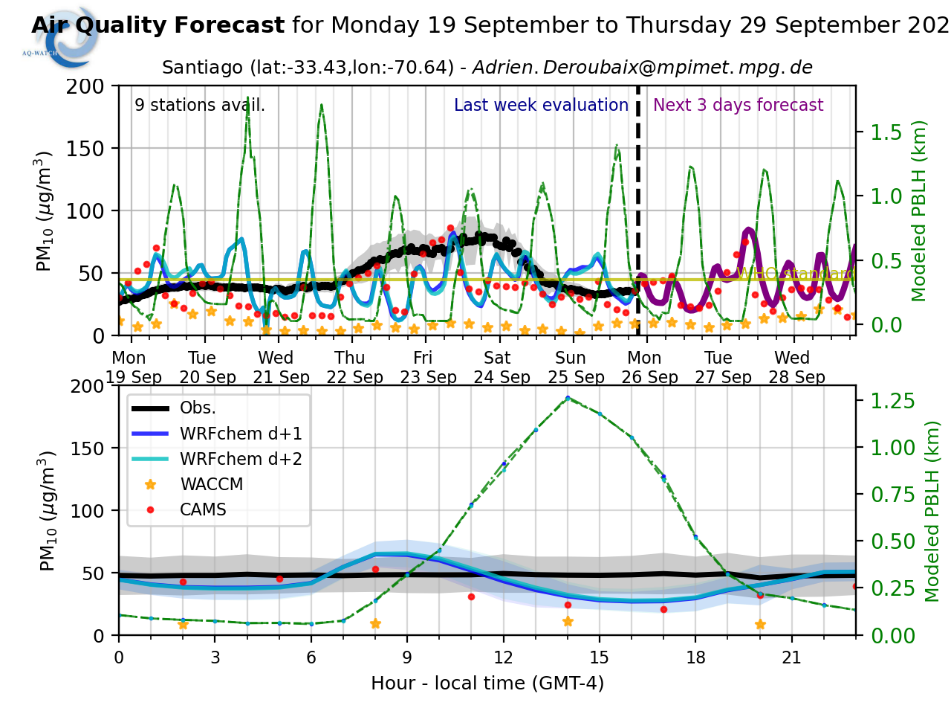
Graph produced by Dr. Deroubaix describing his findings on the intercomparison of Air Quality Prediction in the city of São Paulo, Brazil.
In this study, Dr. Deroubaix assessed the strengths and weaknesses of modeled concentrations of regulated pollutants (CO, O₃, NO₂, PM₂.₅, and PM₁₀) across three contrasting periods in 2019. Four Chemistry Transport Models were involved in this high-resolution intercomparison, with grid spacing below 5 km. The study examined primary pollutants, meteorology, photochemistry, as well as the performance of ozone and PM₂.₅ alerts when WHO air quality standards were not met. The results show that all models perform well, depending on the period and pollutant, and that the multi-model median performs best—consistent with findings from other regions.
In addition, the BMBF project grew significantly over time, incorporating numerous partners in both Brazil and Germany.
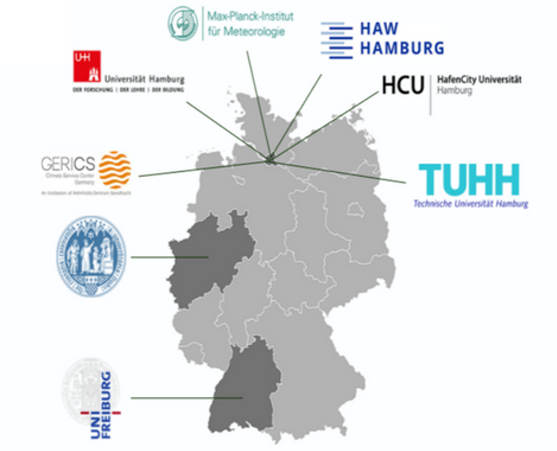
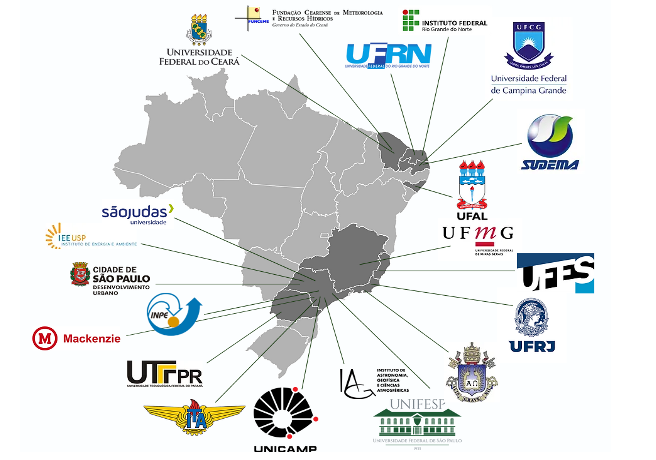
Collaboration among researchers in the Klimapolis Laboratory led to the establishment of a new research program. Over the next five years (2023–2027), the National Institute of Science and Technology Klimapolis (INCT), supported by Brazil’s Ministry of Science, Technology, and Innovation through CNPq, will lead the Klimapolis project. This initiative integrates the responsibilities and participants of the former BMBF Klimapolis Laboratory, strengthening the partnership and expanding its impact.